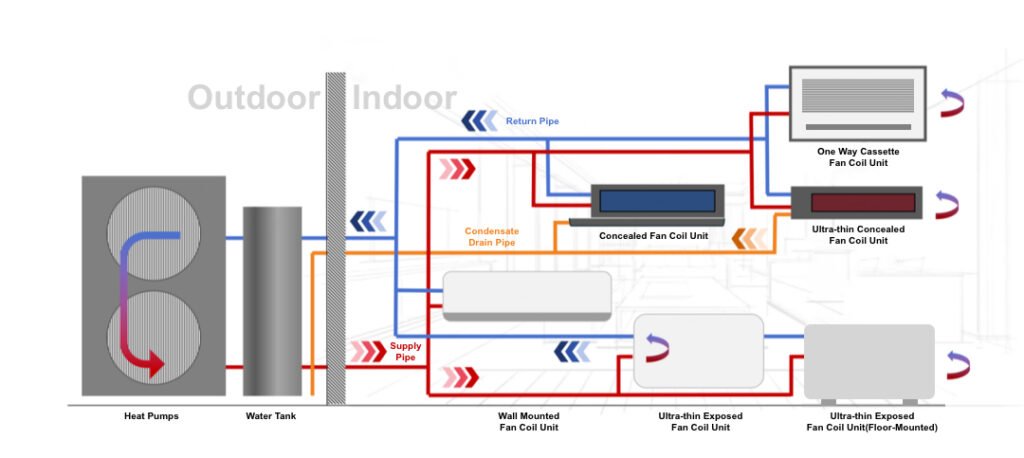

As a professional Fan Coil Unit factory, HanTherm understands that choosing the right terminal device is crucial for any water-based central air conditioning system. This guide answers the most frequent questions from HVAC distributors and engineering contractors.
1. What is a Fan Coil Unit (FCU)?
A Fan Coil Unit is the indoor terminal of a water-based central air conditioning system. The unit consists of three core components: a heat exchanger, a fan, and a filter.
It provides cooling or heating by circulating chilled or hot water. The fan then delivers treated air into the room. Because water serves as the medium, the airflow remains gentle. This precise temperature and humidity control makes FCUs the top choice for high-end hotels and luxury residences.
2. Is Water-Based Central Air Conditioning Widely Used?
Yes, it is the global standard for high-end climate control. All five-star hotels, hospitals, and large public buildings worldwide utilize water-based systems. Today, more high-end villas and residences select this as their preferred solution. They prioritize its outstanding comfort and long-term stability over traditional alternatives.
3. How Effective is a Water-Based Air Conditioning System?
Water-based systems are famous for “five-star comfort.” They provide soft airflow and uniform temperature distribution without strong, drying drafts. Furthermore, these units operate with very low noise.
However, professional design and proper installation are essential. To achieve superior performance, you must precisely match the outdoor main units with the indoor FCU terminals.
4. Is This a New or Mature Technology?
Hydronic (water-based) technology is not new. It has existed for over a century, and the technology is highly mature. You may hear terms like “air-source heat pump” or “hydronic underfloor heating.” These all fall under the water system category. While the names vary by application, the reliable core technology remains the same.
5. Water Systems vs. Refrigerant (VRF) Systems: What is the Difference?
Central air conditioning follows two major technical routes:
Water-Based Systems (U.S. Origin): These focus on maximum comfort. They easily connect to FCUs and underfloor heating to provide a premium indoor environment.
VRF Systems (Japan Origin): These focus on cost efficiency and easy installation. While energy-efficient, they generally offer less comfort compared to hydronic systems.
6. Why Does a Water System Provide Better Comfort?
The secret lies in the temperature management. Water systems maintain a small heat exchange temperature difference (only about 5°C). This results in gentle airflow and prevents excessive dehumidification.
In contrast, VRF systems operate with a massive temperature difference (40–70°C). This often leads to excessive condensate and extremely dry indoor air, which can cause discomfort during prolonged use.
7. Why Choose a Water System for Heating Over VRF?
Most VRF systems prioritize cooling, leaving heating as a secondary function. They often struggle under low-temperature or high-load conditions.
Water systems are different. Engineers design them for high-performance year-round use. In winter, you can combine FCUs with underfloor heating. This configuration offers quiet, efficient, and evenly distributed warmth that far exceeds the capabilities of direct VRF heating.
8. How Should You Choose the Right System?
The choice depends on your project goals and budget:
Choose a Water System + FCU + Underfloor Heating: If you pursue maximum comfort and professional-grade year-round climate control.
Choose a VRF System: If your priority is a lower initial investment and faster installation.
At HanTherm, we recommend consulting with professional HVAC solution providers before making a final decision.